![Variation=Brandmark, Color=WhiteVector.svg]](https://support.q7leader.com/hubfs/Variation=Brandmark%2c%20Color=WhiteVector.svg)
Accessing RDP module
- Access:RDP
- Manage:RDP
To publish, unpublish, or update published RDPs, the following permission must also be enabled:
- Publish:RDP

Purpose of the Role Descriptions & Profiles Module
The Role Descriptions and Profiles module serves as the company’s single source of truth for role descriptions.
It enables HR to:
-
Maintain consistent role structures across the organization.
-
Align roles with market-based compensation data.
-
Define clear expectations at each role level.
- Use consistent language and a shared point of reference for both managers and team members: it acts as a contract that defines mutual expectations.
-
Support recruitment, onboarding, and performance frameworks.
-
Ensure transparency and internal equity.
Structure of a RDP
Each RDP follows a standardized format.
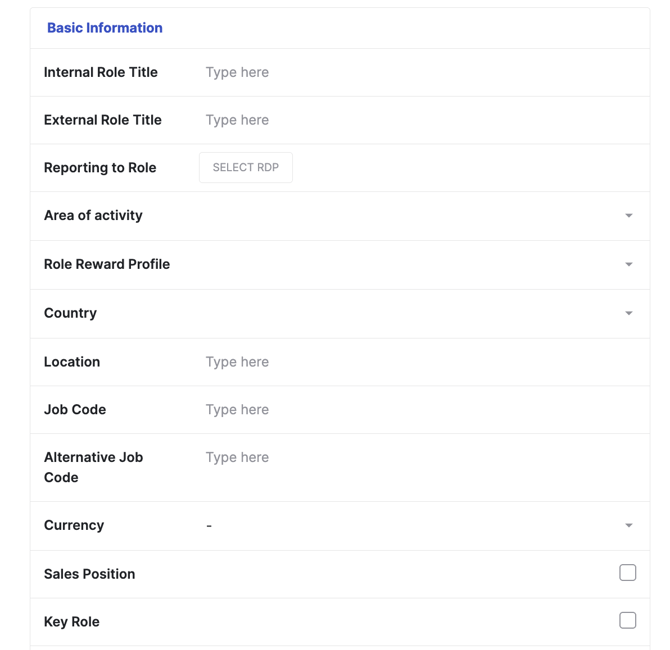
Basic Information
This section includes:
-
Internal role title
-
External role title
-
Reporting to Role
-
Area of Activity: Dropdown to be created under "Area of Activity"
-
Role Reward Profile: Dropdown to be created under "Role Reward Profile"
-
Country
-
Location
-
Job Code
-
Alternative Job Code
-
Currency
-
Sales Position
-
Key Role
HR should use this information to validate organizational design, reporting structures, and title consistency.
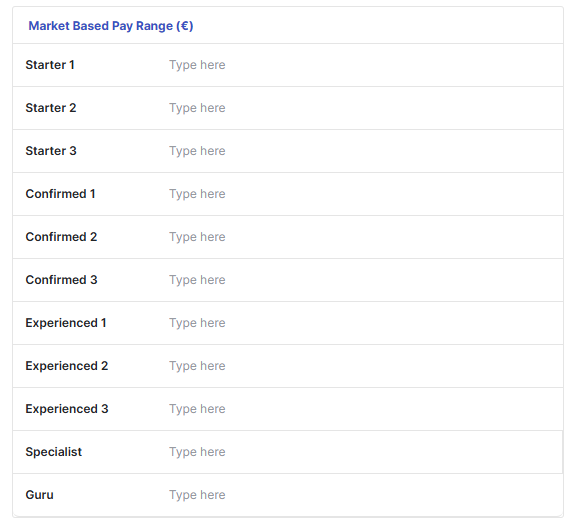
Market-Based Pay Range (MBPR)
The MBPR (Market-Based Pay Range) is derived from external market data and reflects compensation levels for each defined competence level.
General Expectations
Each role is classified under one of seven General Expectation Profiles.

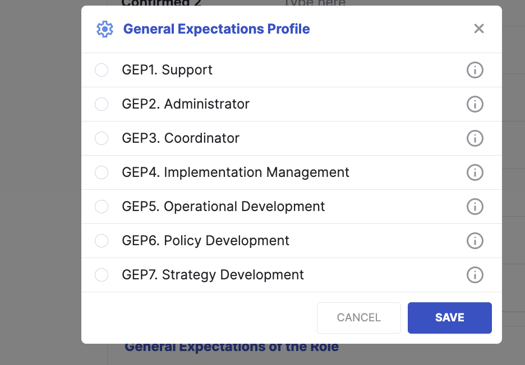
This section:
-
Defines the standardized general expectations associated with a role.
-
Applies consistently across all roles within the same expectation category.
-
Supports cross-functional comparison.
Specific Expectations
The Specific Expectations section reflects how the company defines the role in practice. It includes 11 questions that must be completed.
These expectations:
-
Are tailored to the role and function
-
Complement the general expectations framework
Management Practices
This section outlines:
-
How the team members in this role are intended to be managed
-
Expectations placed on managers for this role
Interview Questions
Each role description includes a set of interview questions primarily intended for HR use.
These questions:
-
Are aligned with role expectations and competencies
-
Support structured and unbiased hiring
-
Promote consistency across recruitment processes
Accessing RDP
There are several ways users can access RDP, depending on their role and permissions:
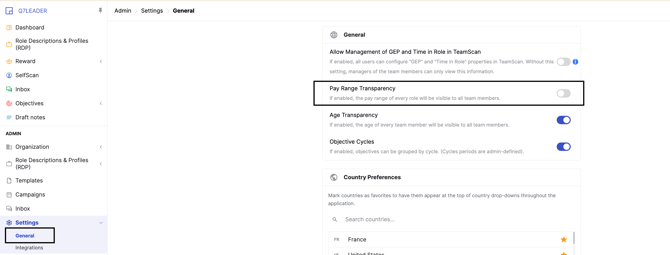
- RDP Public Library: Accessible to all users with the “Access:RDP” permission enabled, this library contains only published RDPs and displays a simplified view of key fields. Pay range transparency is shown here only if it has been enabled in Organization > Settings.
- Individual Team Member Page (via Teamscan): RDPs can also be accessed directly from a team member’s profile. This is particularly useful for managers who may not have access to the full RDP library but still need visibility into their team.
- Dashboard: Users can always access their own RDP from the dashboard, even if they don’t have access to the public library.
- RDP Library (Admin Section): Admins have access to the full RDP library through the dedicated admin section, with more advanced controls and visibility. Creation and Publishing can be enabled either together or separately, depending on your organization’s validation roles.
- Conversations: If a conversation template includes the RDP question, the current RDP for the relevant team member will be displayed within the conversation.
This is visible even to users who do not have access to the public library.
Succession Planning
RDP can be used to support and structure your succession planning.
For more information on Succession Planning feature, please refer to this article.